
Moment of Inertia Model
Product Code : SCL-EE-12147
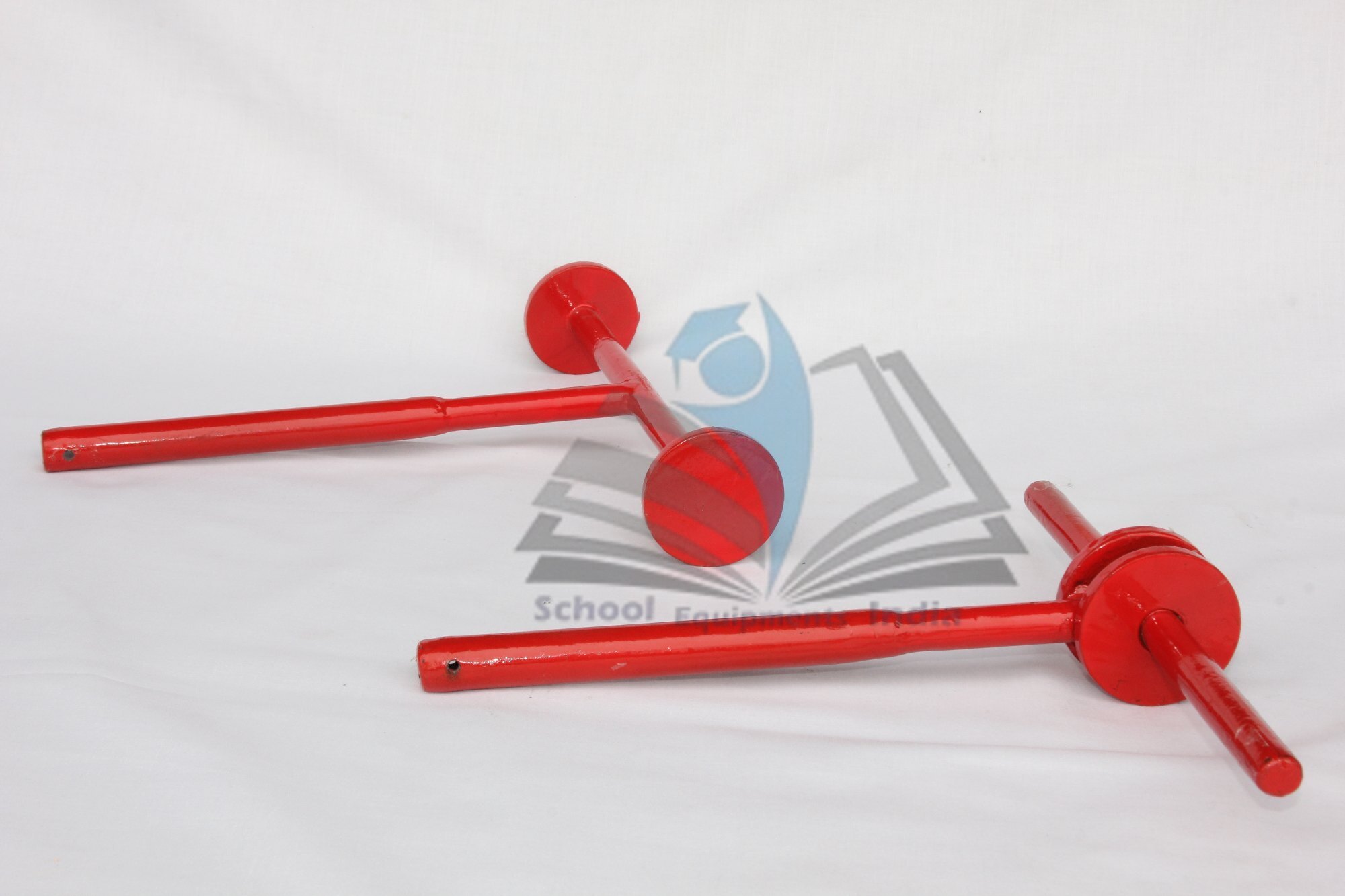
The Moment of Inertia Model by School Equipments India is an educational physics demonstration model designed to explain moment of inertia, rotational motion, angular acceleration, torque, mass distribution, and rotational dynamics. It is widely used in school physics laboratories, science classrooms, STEM labs, and science exhibitions to help students understand how the distribution of mass affects the rotation of an object.
This model provides a practical and visual way to demonstrate why some objects are easier to rotate while others resist rotational motion. By comparing different shapes or mass arrangements, students can observe that moment of inertia depends not only on mass but also on how far the mass is distributed from the axis of rotation.
The Moment of Inertia Model is a useful teaching aid for explaining rotational mechanics. The model generally consists of a rotating platform, axle or spindle arrangement, discs, rings, rods, adjustable masses, support frame, and demonstration accessories as per the supplied design. When an object is rotated, its resistance to change in rotational motion depends on its moment of inertia.
Students can compare the rotation of different bodies such as solid discs, rings, rods, or adjustable mass systems. When mass is placed farther from the axis of rotation, the object becomes harder to rotate and harder to stop. When the mass is closer to the axis, the object rotates more easily. This practical observation helps learners understand the relationship between mass distribution and rotational inertia.
The School Equipments India Moment of Inertia Model is suitable for classroom demonstrations, physics practicals, STEM activities, engineering basics, and science fair projects. It helps connect textbook formulas with real rotational motion experiments.
The Moment of Inertia Model is an important physics teaching aid because it helps students understand rotational inertia through direct observation. Instead of only learning formulas, students can see how the placement of mass affects the rotational behavior of an object.
Teachers can use this model to explain why a solid disc, hollow ring, and rod rotate differently even when they may have similar mass. It also helps students understand real-life applications such as flywheels, wheels, turbines, rotating machinery, spinning athletes, and engineering design. The model improves practical learning through observation, comparison, measurement, and scientific reasoning.
The Moment of Inertia Model is a reliable physics lab model for schools looking for practical rotational motion demonstration equipment. It helps students understand moment of inertia, torque, angular acceleration, rotational inertia, mass distribution, and rotational dynamics through hands-on observation. This model is suitable for science teachers, school laboratories, STEM programs, educational institutions, engineering basics, and science fair demonstrations.
School Equipments India supplies educational science models, physics laboratory apparatus, mechanics demonstration models, STEM kits, geography models, and classroom teaching aids for schools and institutions. The Moment of Inertia Model is designed for practical classroom use and supports clear explanation of rotational mechanics and mass distribution concepts.
This product content supports Google E-E-A-T guidelines by providing clear product information, accurate educational purpose, practical usage instructions, product specifications, safety guidance, and relevant classroom applications. The content is written for science teachers, school buyers, laboratory planners, STEM educators, and educational institutions looking for dependable physics demonstration models.
Moment of Inertia Model, moment of inertia apparatus, rotational inertia model, physics lab rotational motion model, torque and inertia apparatus, angular acceleration demonstration model, rotational dynamics teaching aid, STEM physics model, school physics lab equipment, School Equipments India Moment of Inertia Model.
A Moment of Inertia Model is a physics demonstration model used to show how mass distribution affects the rotational motion of an object.
It is used to teach students about moment of inertia, rotational inertia, torque, angular acceleration, mass distribution, and rotational dynamics.
It demonstrates that the moment of inertia of a body depends on its mass and the distance of that mass from the axis of rotation.
No, the basic Moment of Inertia Model is manually operated and does not require electricity for standard classroom demonstrations.
When mass is farther from the axis of rotation, the object has greater moment of inertia and resists changes in rotational motion more strongly.
Teachers can explain moment of inertia, torque, angular acceleration, rotational motion, axis of rotation, mass distribution, and rotational kinetic energy.
Yes, it is suitable for school physics laboratories, science classrooms, STEM labs, colleges, engineering basics, and practical demonstrations.
Yes, students can perform experiments under teacher supervision. Proper care should be taken while rotating parts are in motion.
Yes, the Moment of Inertia Model is useful for science exhibitions because it provides a clear and practical demonstration of rotational inertia.
This Moment of Inertia Model is supplied by School Equipments India.
Moment of Inertia Model for School Physics Laboratory
Product Description
Key Features
Product Specifications
Product Name
Moment of Inertia Model
Brand
School Equipments India
Category
Physics Lab Model / Rotational Motion Model / STEM Teaching Aid
Application
Demonstration of moment of inertia, rotational motion, torque, and mass distribution
Working Principle
Moment of inertia depends on the mass of a body and its distribution about the axis of rotation
Main Components
Rotating platform, axle or spindle, support frame, discs or rings, adjustable masses, rods, and accessories as per supplied model
Suitable For
Schools, colleges, physics laboratories, science classrooms, STEM labs, engineering labs, and science exhibitions
Usage Type
Manual physics demonstration and practical model
Learning Topics
Moment of inertia, rotational inertia, torque, angular acceleration, mass distribution, axis of rotation, and rotational dynamics
Power Requirement
No electricity required for basic manual demonstration
Material
Durable educational-grade components; specifications may vary as per supplied model
Packaging
Securely packed for safe transportation and institutional supply
How to Use the Moment of Inertia Model
Safety and Handling Instructions
Educational Importance
Applications
SEO-Friendly Product Benefits
Why Choose School Equipments India?
E-E-A-T Content Note
SEO Keywords
Frequently Asked Questions
1. What is a Moment of Inertia Model?
2. What is the use of this model in schools?
3. Which principle does the Moment of Inertia Model demonstrate?
4. Does this model require electricity?
5. Why does mass distribution affect rotation?
6. What topics can teachers explain using this model?
7. Is this model suitable for school physics laboratories?
8. Can students perform experiments using this model?
9. Is the Moment of Inertia Model useful for science exhibitions?
10. Which brand supplies this Moment of Inertia Model?

.jpg)
.jpg)

.jpg)
.jpg)
.png)